Loading
Sri Chanakya Institution of Hotel Management & CT is Visakhapatnam's premier hospitality education institute offering industry-aligned degree & diploma programs with 100% placement support.

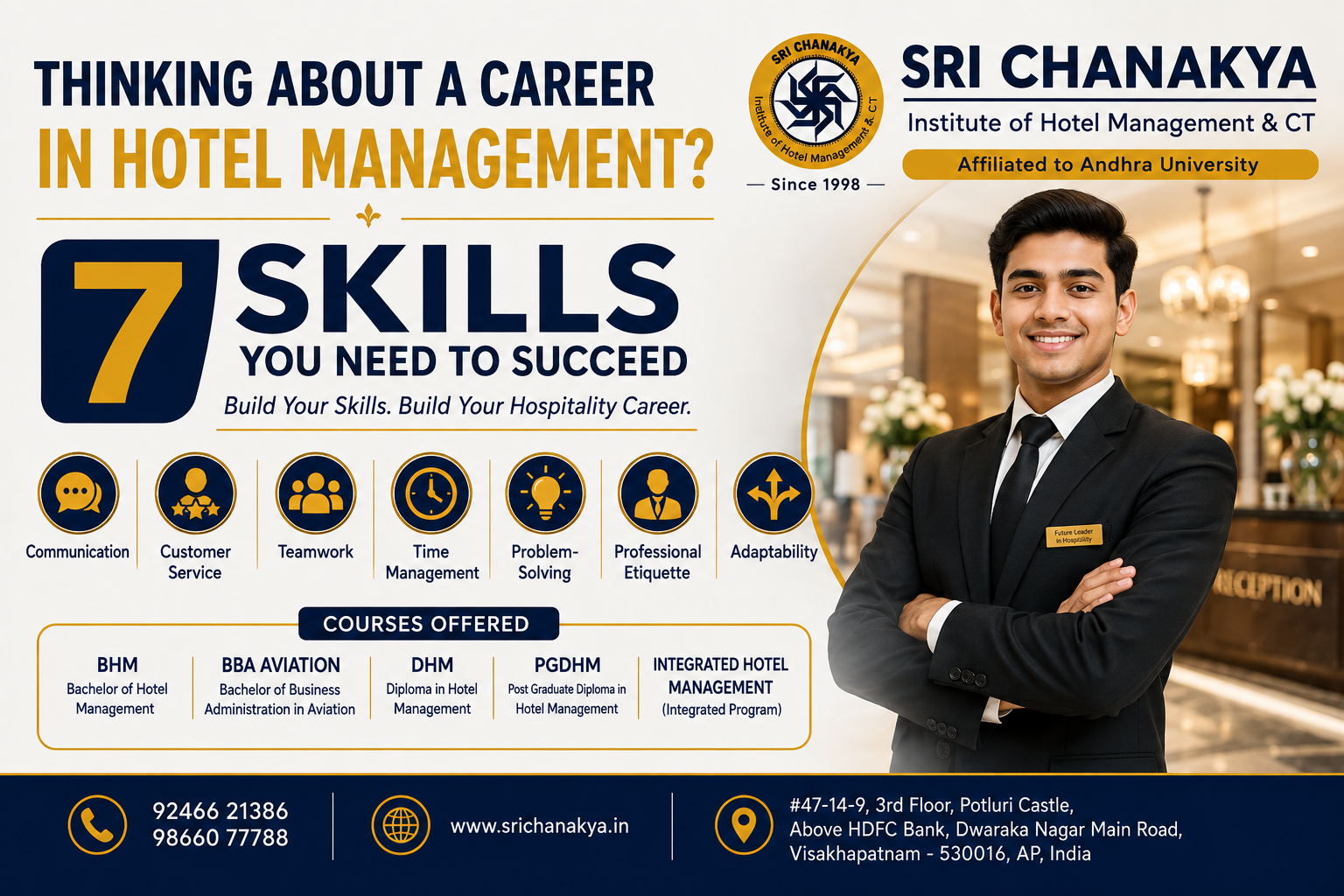
Is a Hotel Management degree alone enough to succeed in the hospitality industry? Or do you need communication, customer service, teamwork, confidence, and other professional skills to stand out?
Hotel Management is not just about learning how hotels operate, preparing food, or managing guests. It is a people-oriented profession where the way you communicate, handle situations, work with a team, and respond to customer needs can make a major difference in your career.
That is why students planning to enter the hospitality industry should start developing these skills while they are still studying.
Whether you are considering a BHM, Diploma in Hotel Management, PGDHM, BBA in Aviation & Airport Management, or another hospitality-related program, understanding these skills can help you prepare better for your future career.
So, what are the seven skills every Hotel Management student should develop? Let's take a look.
Communication is one of the most important skills in the hospitality industry.
Hotel professionals interact with guests, colleagues, managers, suppliers, and people from different backgrounds every day. Clear and confident communication can help professionals understand customer requirements and provide better service.
How Students Can Improve: Students can improve their communication skills through presentations, group activities, guest interactions, role plays, and regular practice.
Why do guests remember a hotel?
Often, it is not just because of the room or food, but because of the service they received.
Understanding guest expectations, responding politely to questions, handling requests, and maintaining a positive attitude are essential parts of customer service.
Hotel Management students should learn how to understand different customer needs and provide professional service even in challenging situations.
Can one person run an entire hotel?
Of course not.
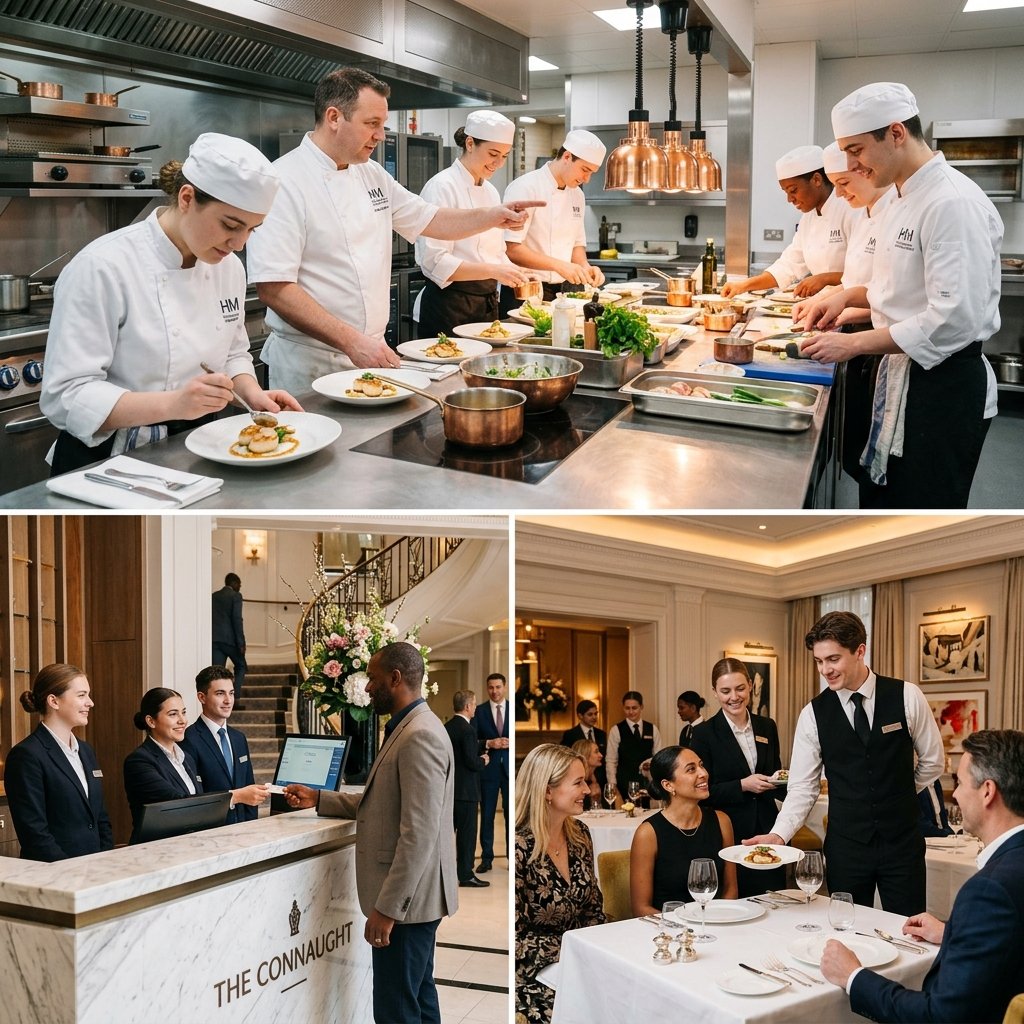
A hotel operates through the combined efforts of several departments. Front office, housekeeping, food production, food and beverage service, maintenance, and management teams need to work together to provide a smooth guest experience.
Learning how to communicate with team members, share responsibilities, support colleagues, and work towards a common goal is therefore an important part of hospitality education.
Hospitality can be a fast-paced industry.
Imagine handling multiple guests, reservations, food orders, events, and service requests at the same time. Without proper time management, maintaining service quality can become difficult.
Students who develop good planning and prioritization habits during their education can be better prepared for professional responsibilities.
What happens when something doesn't go according to plan?
A guest may have a special request, a reservation may need to be changed, or an unexpected operational issue may occur during a busy period.
Hospitality professionals need to remain calm, understand the situation, and find practical solutions while maintaining professional service.
Developing problem-solving skills can help students become more confident when dealing with real-world situations.
In hospitality, first impressions matter.
Professional appearance, body language, grooming, punctuality, polite communication, and workplace discipline are all important aspects of hospitality professionalism.
Professional etiquette is not only about appearance. It also includes respecting guests and colleagues, maintaining workplace standards, and behaving responsibly.
The hospitality industry keeps changing.
New technologies, changing guest expectations, international travel trends, digital booking systems, and evolving service standards continue to influence the industry.
Students who remain open to learning new skills and adapting to different situations can create more opportunities for themselves in the future.
These skills should not be treated as something students learn only after getting a job.
The earlier students start developing them, the more confident they can become when entering the professional world.
Classroom education provides the foundation, while practical training, activities, presentations, teamwork, and industry exposure allow students to apply what they learn.
At Sri Chanakya Institution of Hotel Management & CT, students are trained through a combination of theoretical education and practical learning to help them develop industry-relevant knowledge and professional skills.
One of the biggest advantages of Hotel Management is that your career does not have to be limited to a traditional hotel job.
Depending on their qualifications and interests, students can explore opportunities in:
Choosing a Hotel Management course is only the beginning.
To grow in the hospitality industry, students need to continuously improve their communication, customer service, teamwork, problem-solving, time management, professional etiquette, and adaptability.
This combination can help students become more confident and better prepared for the hospitality industry.
Sri Chanakya Institution of Hotel Management & CT, Visakhapatnam focuses on providing students with industry-oriented education, practical exposure, and career preparation.
Sri Chanakya Institution of Hotel Management & CT — Visakhapatnam