Loading
Sri Chanakya Institution of Hotel Management & CT is Visakhapatnam's premier hospitality education institute offering industry-aligned degree & diploma programs with 100% placement support.
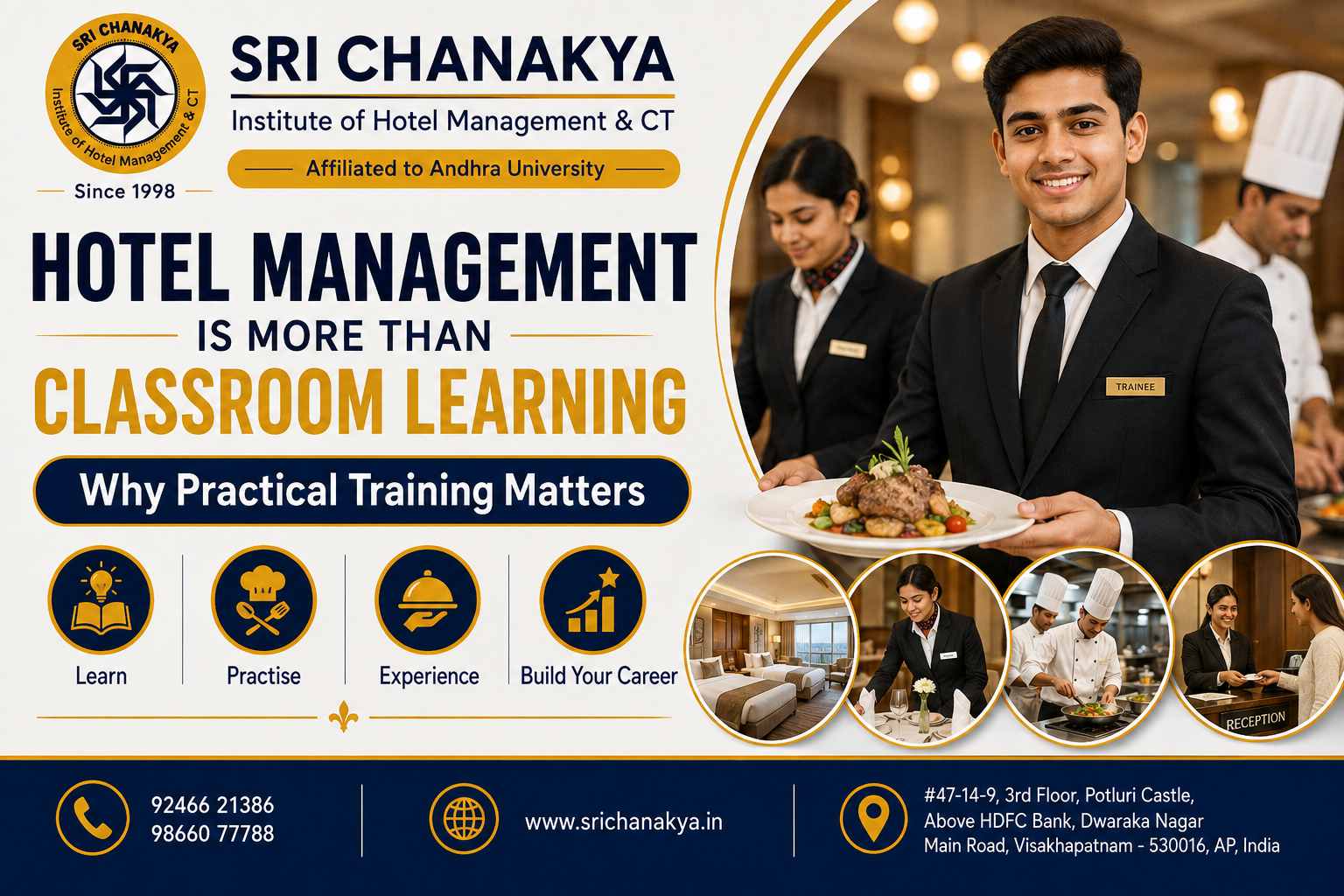
Hotel management is a practical profession. Students may learn the principles of food production, front office operations, housekeeping, and food & beverage service in the classroom, but understanding how these departments actually work requires hands-on experience.
This is why practical training has become an essential part of hospitality education.
Hotel management students need to understand more than theories and textbooks. They need to know how to interact with guests, manage responsibilities, work with a team, maintain professional standards, and respond to situations that can arise in a real hospitality environment.
Practical training gives students an opportunity to experience these responsibilities before entering the workplace.
Cooking is not something that can be mastered through theory alone.
Students need to understand ingredients, cooking methods, kitchen safety, presentation, and time management through regular practice.
Hands-On Kitchen Training at Sri Chanakya:
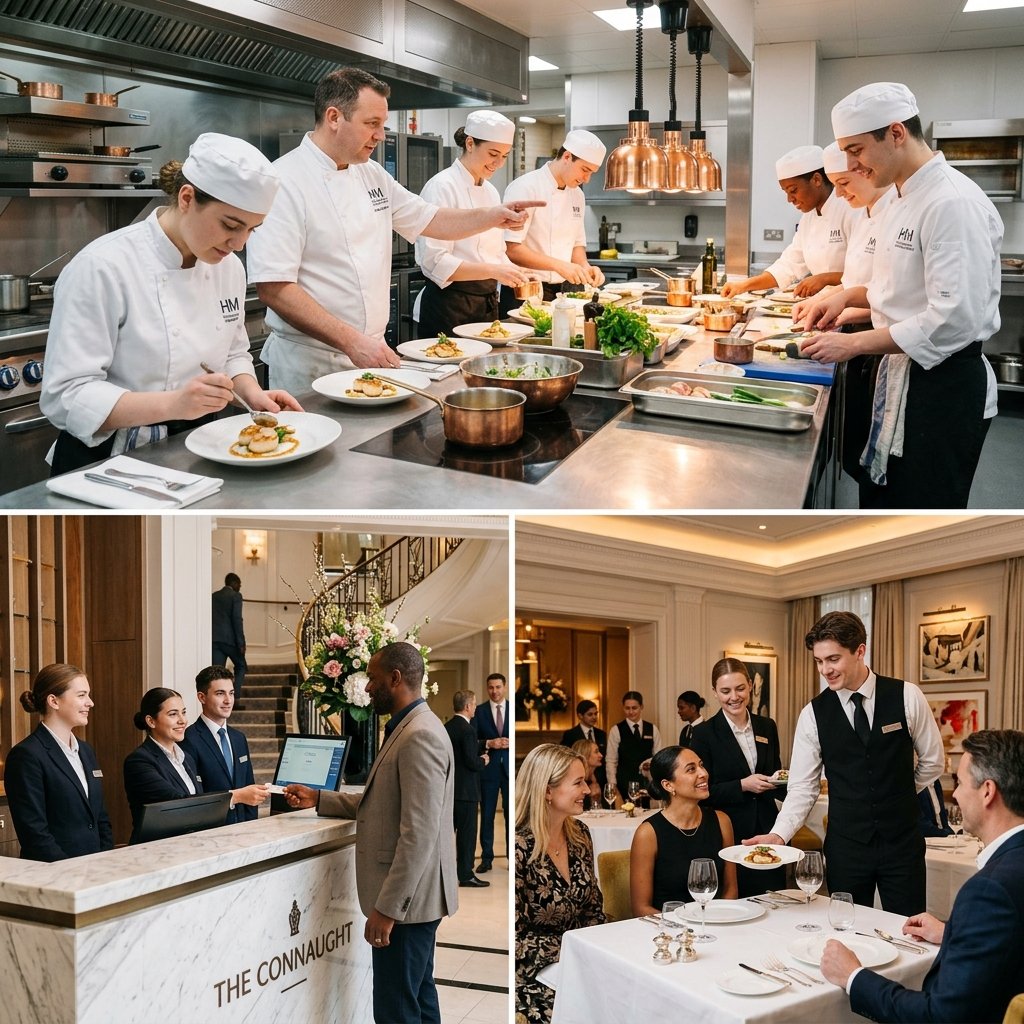
At Sri Chanakya, practical kitchen training includes Basic Training Kitchen (BTK), Advanced Training Kitchen (ATK), and Quantity Training Kitchen (QTK), along with dedicated bakery facilities. Students learn different styles of cooking, international cuisines, and food presentation techniques.
This type of hands-on exposure helps students become more comfortable, efficient, and disciplined when working in high-pressure professional kitchen environments.
The front office is one of the first and most critical points of interaction between a hotel and its guests.
Students need to learn how reservations, check-in, check-out, guest communication, and telephone etiquette work in actual practice.
Practical Setup at Sri Chanakya:
Sri Chanakya's front-office training setup allows students to practise key front desk activities such as guest reception, reservation software handling, check-in & check-out procedures, telephone etiquette, and customer relationship management.
This practical experience helps students develop poise, effective communication, and confidence before they begin working with real hotel guests.
Housekeeping involves much more than simply cleaning a room.
Students learn about maintaining guest rooms and public areas, laundry operations, flower arrangement, bed making, presentation, and extreme attention to detail.
Model Deluxe Room Setup:
Sri Chanakya provides a model deluxe-room setup where students practise real housekeeping procedures, room inspection checklists, and understand the five-star luxury standards expected in premium hospitality environments.
Food and beverage service is another major pillar of hotel operations.
Students need to understand table setting, order taking, serving etiquette, beverage service, guest interaction, and fine-dining restaurant management.
Training Restaurant & Bar:
Sri Chanakya provides a fully equipped training restaurant and bar setup where students simulate live dining operations, banquet setups, mocktail crafting, and silver service protocols.
One of the biggest advantages of practical training is that students experience situations that may be difficult to understand through theory alone.
Handling dietary needs, room preferences, and last-minute requests with care.
Resolving complaints calmly and turning a negative experience into guest satisfaction.
Modifying reservations and managing overbooking gracefully under pressure.
Maintaining speed, food safety, and order accuracy during busy dining hours.
Learning how to remain calm, communicate professionally, and find appropriate solutions on the spot is an important milestone in becoming a true hospitality professional.
Hotels operate seamlessly through teamwork.
Front office, housekeeping, food production, and food & beverage teams must constantly coordinate with one another to deliver an flawless guest experience.
Practical group activities allow students to work together, divide responsibilities, understand inter-departmental dependencies, and develop communication, leadership, and camaraderie.
The transition from college to the workplace can be challenging for any student.
Students who have already experienced practical activities and industrial training possess a clearer understanding of workplace expectations, corporate discipline, and guest service standards.
Sri Chanakya's Career Philosophy: Sri Chanakya highlights hands-on learning, industry exposure, and placement support as part of its hospitality education approach. The institute focuses on leadership, technical proficiency, and soft skills to help every student become industry-ready from day one.
Hotel Management opens doors to careers across a dynamic range of global industries.
Students with strong practical skills can explore career pathways in:
The hospitality industry is constantly changing.
Guest expectations, smart hotel technologies, international travel standards, and culinary trends continue to evolve rapidly. Students therefore need both solid academic knowledge and a deep practical understanding.
Training with realistic facilities, experienced instructors, and real industrial exposure helps students bridge the gap between classroom theory and real-world hospitality operations.
When students and parents compare hotel management institutes, they should look beyond the course name. It is worth asking these essential questions:
These factors make all the difference when preparing for a fulfilling and high-growth career in hospitality.
— Sri Chanakya Institution of Hotel Management & CT, Visakhapatnam