Loading
Sri Chanakya Institution of Hotel Management & CT is Visakhapatnam's premier hospitality education institute offering industry-aligned degree & diploma programs with 100% placement support.

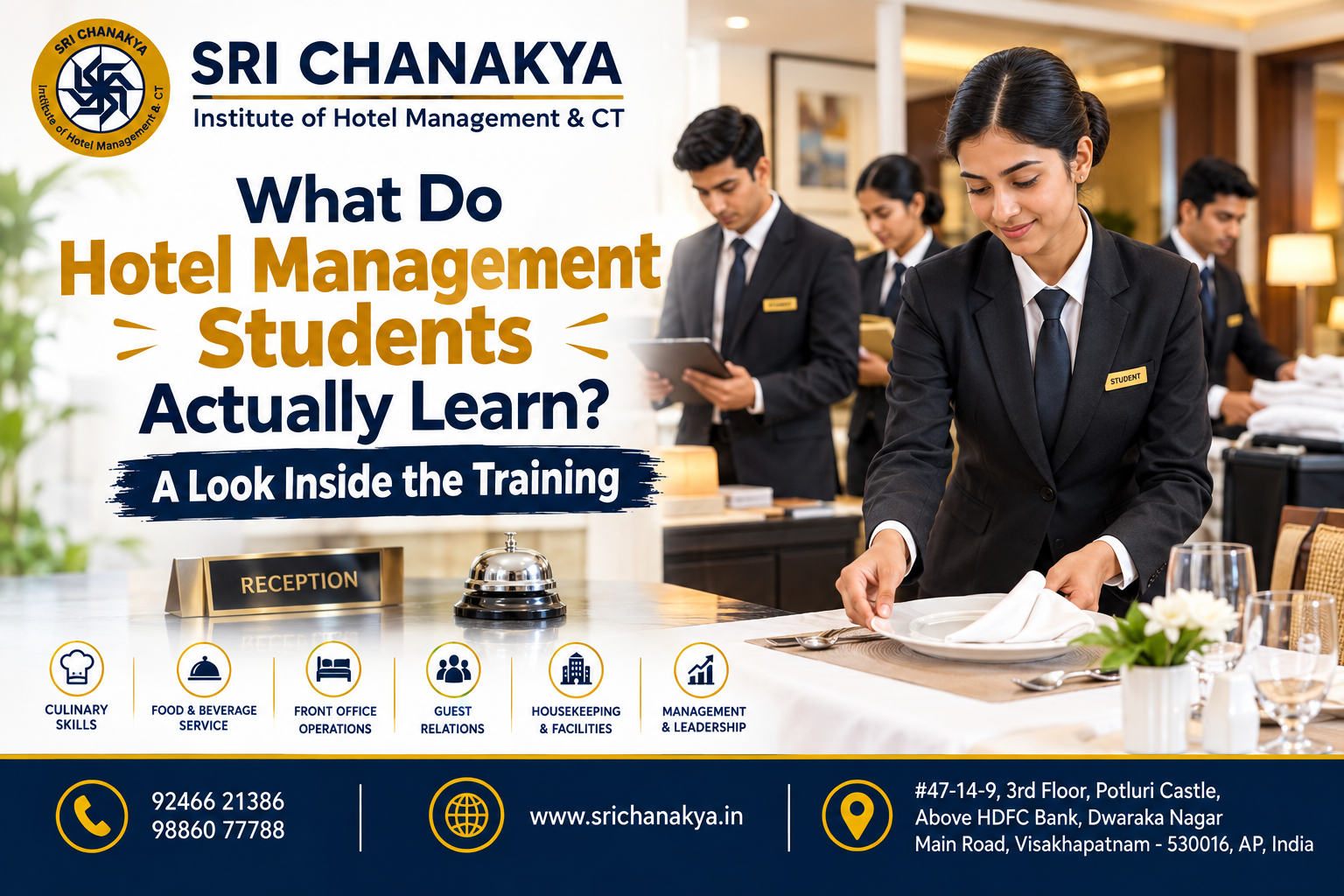
When students hear the term Hotel Management, many immediately think about cooking, restaurants, or working in hotels. But professional hospitality education is much broader than that.
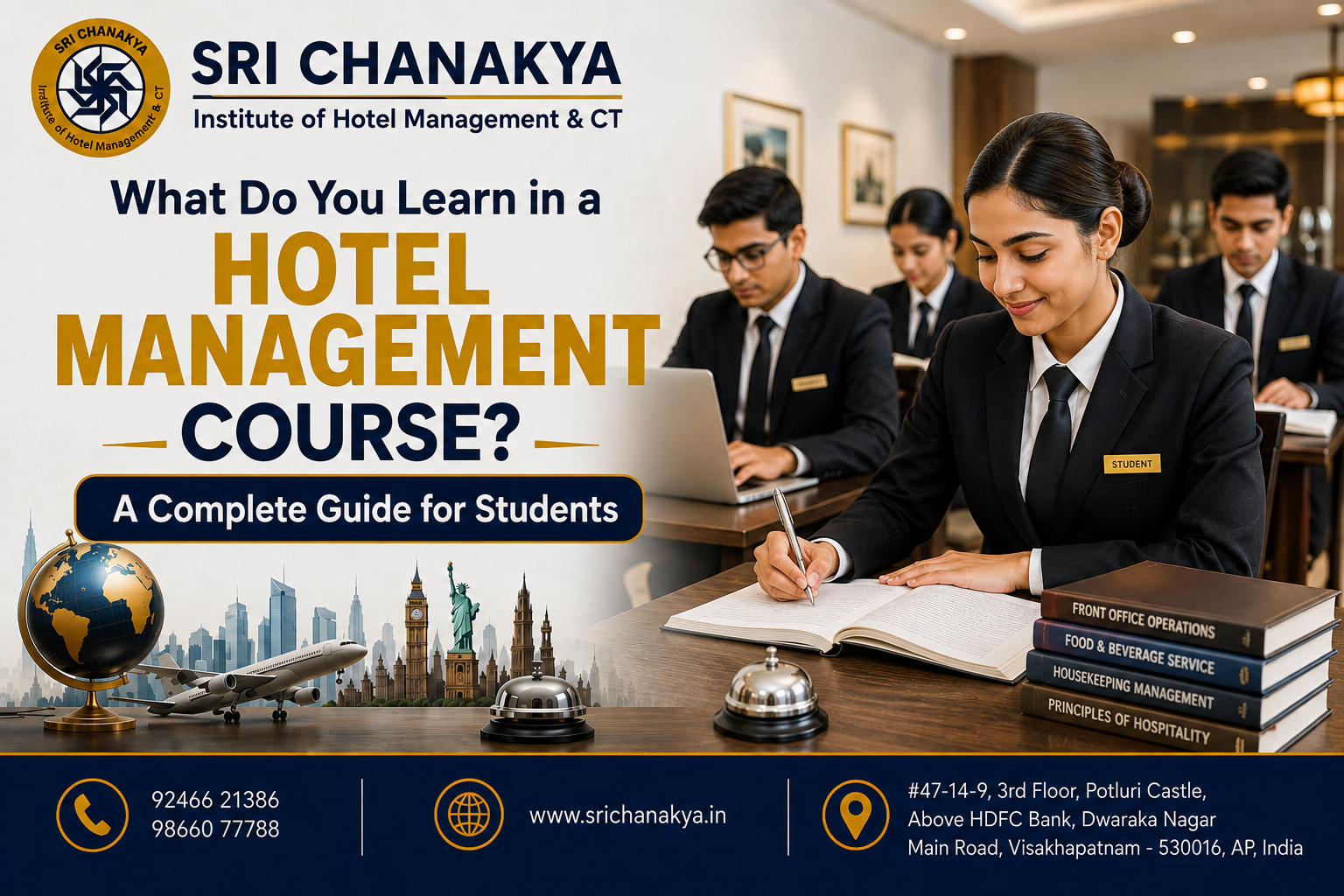
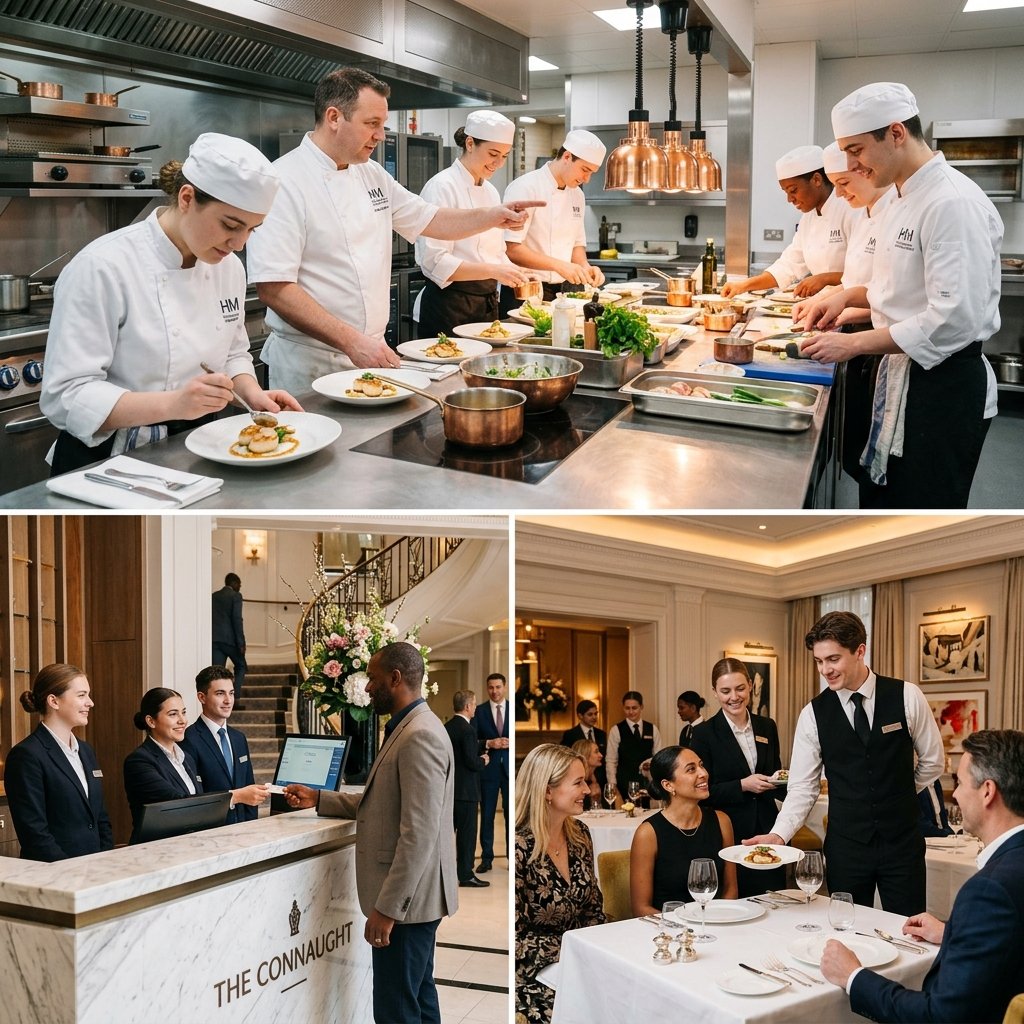
Hotel Management students learn how different departments of a hotel or hospitality business work together. Along with classroom knowledge, students develop practical skills in areas such as food production, bakery, food and beverage service, front office, housekeeping, communication, guest handling, and professional etiquette.
For students considering a career in hospitality, understanding what actually happens during Hotel Management training can help them make a more informed decision.
Cooking is an important part of hospitality, but it is only one area of Hotel Management.
A hotel needs professionals to manage many different operations, including:
Students get exposure to these areas so they can understand how the different departments contribute to the overall guest experience.
Food production is one of the most practical areas of Hotel Management education.
Students learn how a professional kitchen operates, from preparing ingredients to following proper cooking and hygiene procedures. Training can include:
The objective is not simply to teach students how to prepare food. They also learn how a professional kitchen needs to function efficiently and safely.
Bakery is another interesting area for students who enjoy working with food.
Students can learn the fundamentals of:
Bakery training also helps students understand the importance of accuracy, consistency, cleanliness, and time management.
Preparing food is only one part of the guest experience. Serving it professionally is equally important.
Food and Beverage Service training introduces students to restaurant and service operations.
Students can learn about:
Students also learn how communication and presentation can influence a guest's overall dining experience.
The front office is often the first point of contact between a guest and a hotel.
Students learn how front-office teams manage different stages of the guest journey. Training may include:
Students learn that professionalism and communication are particularly important in this department because they interact directly with guests.
A clean and well-maintained environment is an essential part of hospitality.
Housekeeping training helps students understand how hotels maintain rooms and public areas according to professional standards. Students can learn about:
Standard room cleaning procedures, bed making techniques, and room inspection routines.
Operating commercial cleaning equipment, managing housekeeping inventory and supplies.
Linen care, stain removal, fabric maintenance, and commercial laundry processes.
Maintaining public-area cleanliness, health protocols, and strict hygiene standards.
Although guests may not always see the work happening behind the scenes, housekeeping plays a major role in creating a comfortable hotel environment.
Hospitality professionals interact with people every day. Because of this, students need to develop more than technical knowledge.
These skills can be useful across almost every hospitality role.
A hotel may have guests from different cities, countries, cultures, and backgrounds. Students therefore learn how to communicate politely and professionally with different types of guests.
They can develop skills such as:
Good communication can help hospitality professionals create a positive experience for guests.
Hotels cannot operate through one department alone.
For example, a guest's stay may involve the front office, housekeeping, restaurant, kitchen, maintenance, and management teams.
Students learn to work as part of a team and understand how different departments coordinate with one another.
Practical activities, group assignments, events, and training exercises can help students develop collaboration and leadership skills.
Practical events can give students an opportunity to apply classroom knowledge in a real activity.
Students can take part in activities involving:
These experiences can help students understand that hospitality involves planning and coordination as much as technical skills.
Hotel Management is not only about operational work. Students also need to understand how hospitality businesses function as organizations.
Depending on their programme, students may learn about areas such as:
This broader knowledge can help students understand the business behind the services they provide.
Technology has become an important part of hotel operations.
Modern hospitality businesses use technology for reservations, billing, guest management, communication, inventory, marketing, and other operations.
Students can benefit from learning about digital tools and software used in hospitality environments.
Understanding technology alongside traditional hospitality skills can help students adapt to changing industry requirements.
One of the biggest differences between simply reading about hospitality and actually practising it is confidence.
When students repeatedly perform tasks in a practical environment, they become more familiar with professional procedures.
For example, a student may initially feel nervous while handling a guest interaction. With regular practice, communication becomes more natural.
Similarly, kitchen training can help students become familiar with equipment, food preparation processes, hygiene standards, and teamwork.
Practical learning connects classroom concepts with workplace situations.
Classroom and laboratory training provide the foundation, but industry exposure can give students a better understanding of professional hospitality operations.
Internships and industry training can allow students to experience:
Such exposure can also help students understand which hospitality department matches their interests and strengths.
Hospitality is a people-oriented industry. Employers look for professionals who can combine knowledge with practical skills.
A student may know the theory behind restaurant service, but professional experience teaches them how to communicate with guests, coordinate with colleagues, manage time, and respond to unexpected situations.
This is why practical training is an important part of hospitality education.
Students should look beyond the course name when selecting a Hotel Management college.
Before making a decision, students and parents can consider:
The learning environment can play an important role in helping students develop confidence and professional skills.
Students can also improve their career readiness outside regular classes.
Some useful habits include:
The combination of education, practice, discipline, and continuous learning can help students prepare for the hospitality industry.
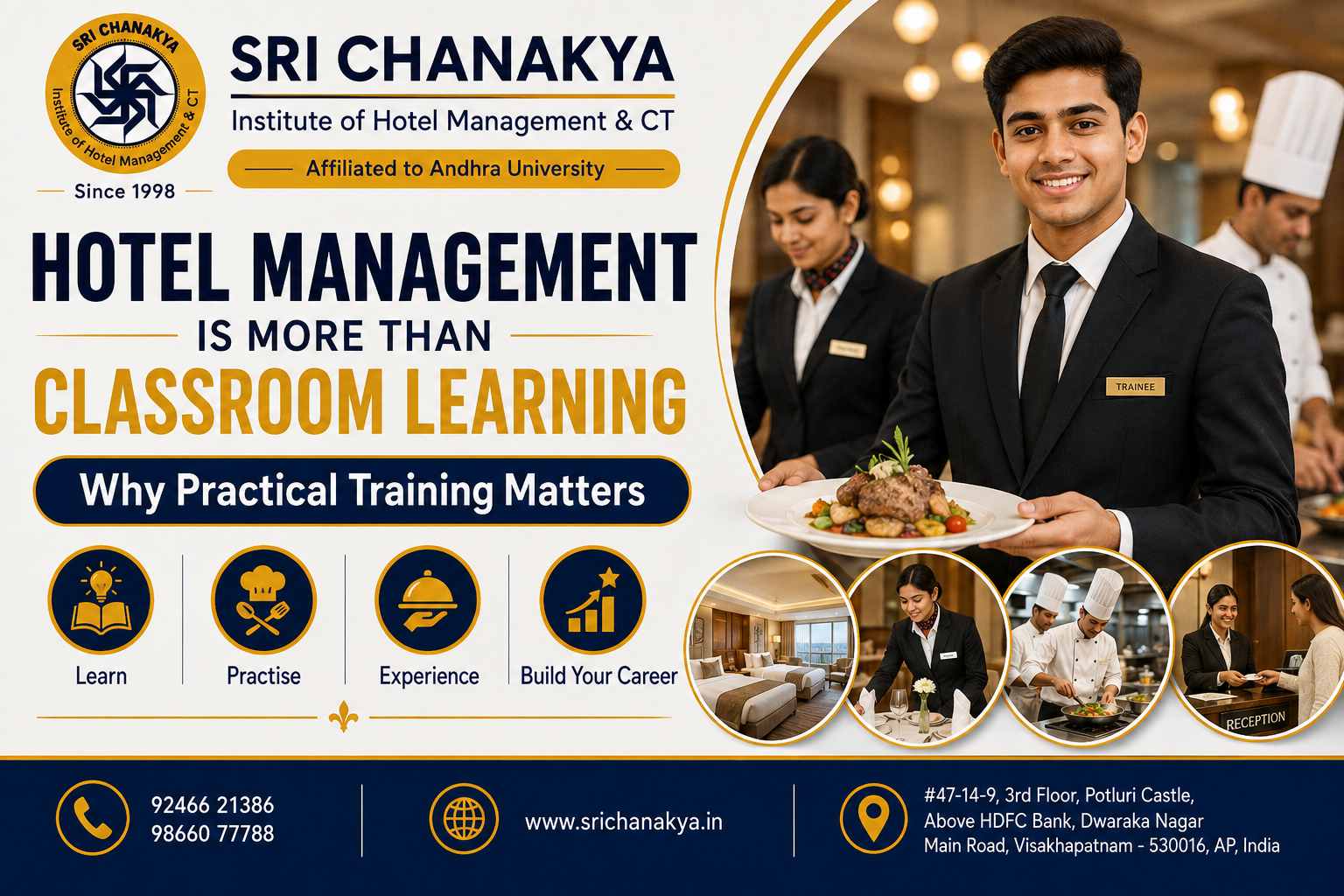
Hotel Management education is not limited to textbooks or lectures.
Students learn by preparing food, serving guests, managing front-office activities, maintaining hospitality standards, participating in events, working in teams, and understanding how different hotel departments operate.
This practical exposure helps transform classroom knowledge into professional skills.
For students who enjoy hospitality, communication, food, travel, teamwork, and working with people, Hotel Management can provide a wide range of areas to explore.
Hotel Management education is a combination of knowledge, practical training, communication, teamwork, and professional discipline.
From the kitchen to the front office, from housekeeping to restaurant service, students get the opportunity to understand the different parts of the hospitality industry.
The right training environment can help students build practical confidence and prepare for the expectations of the professional world.
For anyone considering a career in hospitality, understanding the practical side of Hotel Management is an important first step toward choosing the right course and building the right skills.
— Sri Chanakya Institution of Hotel Management & CT, Visakhapatnam